near the local.
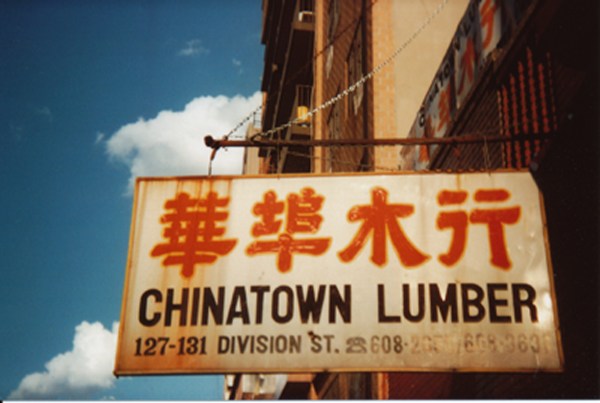
My local bar — which is my regular watering hole even though it’s not even in my borough — doesn’t open until 7pm on most nights. This lumber spot is not too far down the street from the bar, but looking at how vivid the light is in the photo, I’m guessing it was nowhere near drinking time when I took this. It was taken with a Holga 135 — Holga’s 35mm model — which Daniel gave me as a gift a few years ago, but which he’s been using quite a bit more than I have recently. Holgas are such unpredictable little machines (Wiki refers to them as having “low fidelity aesthetics,” which, well … ok, Wiki) : oftentimes you’ll get something almost there, but not quite. Then there are moments like this, where the mid-afternoon light, film, and peculiar Holga optics come together quite harmoniously. The saturation here sometimes just takes my breath away, and that’s the magical and infuriating thing about Holgas: I have no idea how (or when) that kind of perfect confluence even works.
inaugural kodachrome.

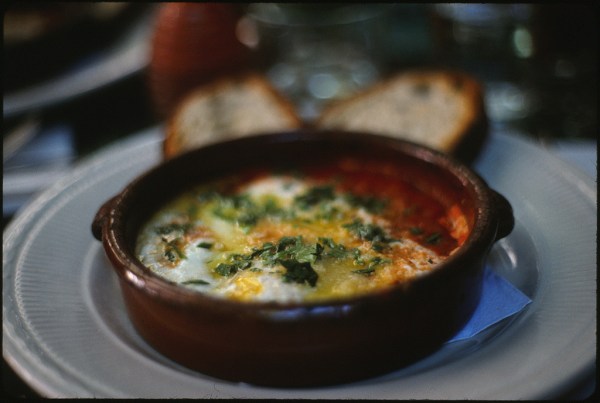


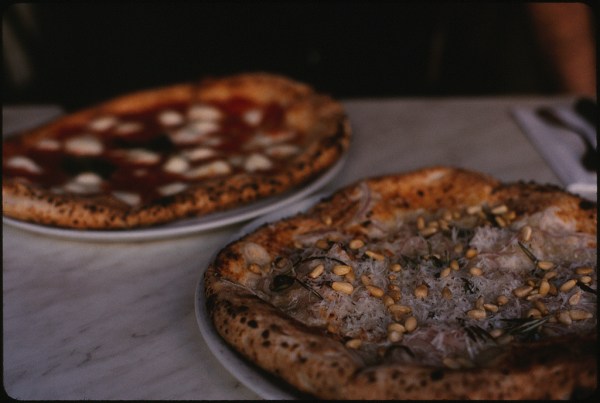
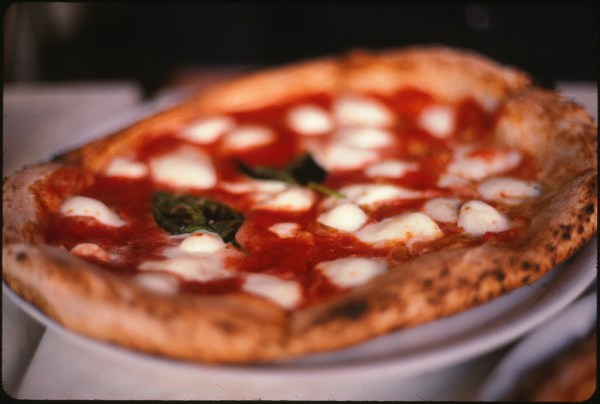


So I just got my first Kodachrome roll back from Dwayne’s Photo in Kansas, the last place in the US that is developing the stuff (and only until 12/31/10). I tried as much as I could to take photos in a lot of different places, with different exposures and available light, just so I’d get a sense of how this film worked. And …. I still don’t know what to do with it. I didn’t post the photos taken around 1 in the afternoon, by the Brooklyn waterfront and under direct sunlight; Kodachrome seems to be as bored with direct sun as I generally am, and the blue skies were as generically blue as skies can be. From what I can tell, it looks like sunset, and a bit of shade, seems to coax out some of what Kodachrome supposedly does best — bring out the nuances in tones. I’m also told it does wonders on a cloudy, overcast day. (Autumn, where are you already?!)
The thing is, I think any sort of wistful hope I had that the film would simply produce something like, say, this was pretty foolhardy. For all of its nostalgia value, recent batches of Kodachrome were manufactured with fairly straightforward, non-nostalgic intentions: to record a moment as accurately as possible in terms of colors, tone, and the like. The nostalgia comes later; it has to, no? (Or maybe I just need to move to some open expanse in the South. Shiphome’s entire flickr set makes a good case for packing up all of my expired film and heading to North Carolina, maybe Georgia, and spending my days seeking out nearly-shuttered ice cream parlors and overgrown kudzu patches.)
All of that said, these were all taken in the past 2-3 weeks, in particularly happy, occasionally famished, and sometimes elegiac moments: a lazy Sunday brunch here, a soccer game there (go Thierry Henry!), a so-so pizza outing with great company, the big room emptied out by a departing housemate, and a Saturday at the park with the most energetic and gleeful four year old Phillies fan ever.
the following project.

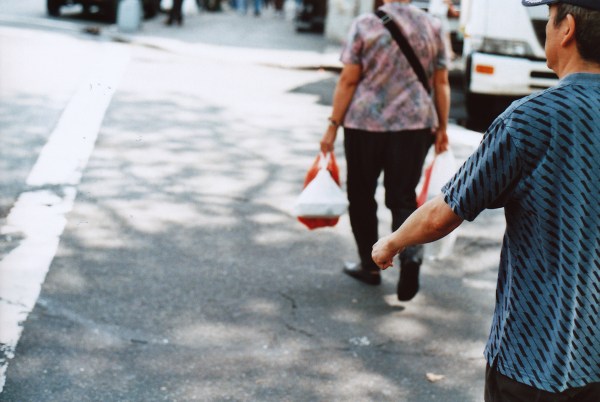
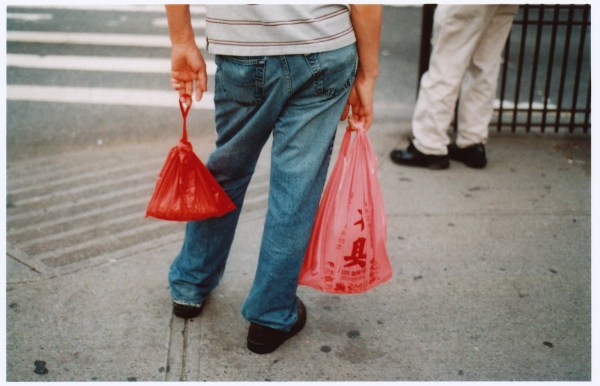


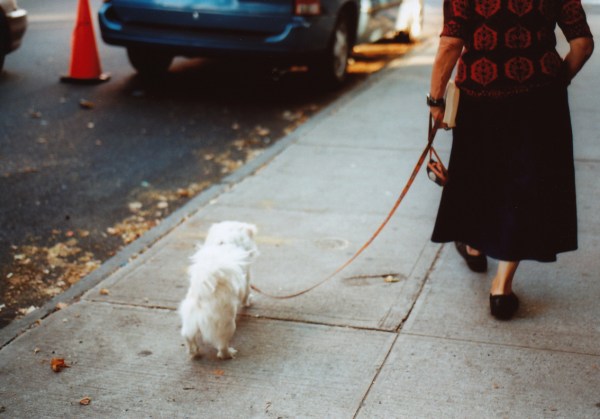
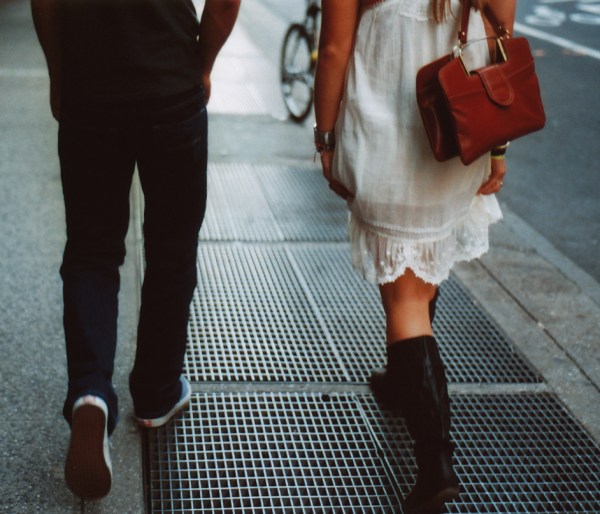


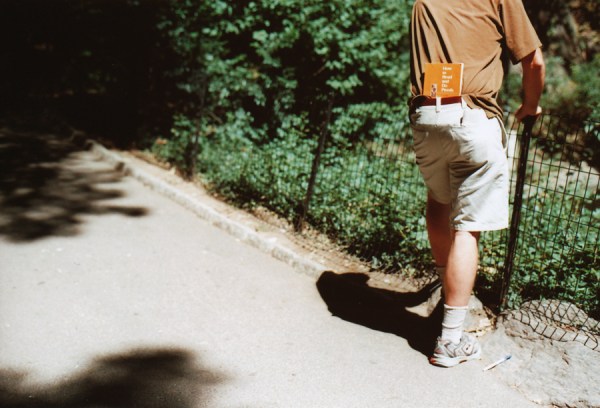
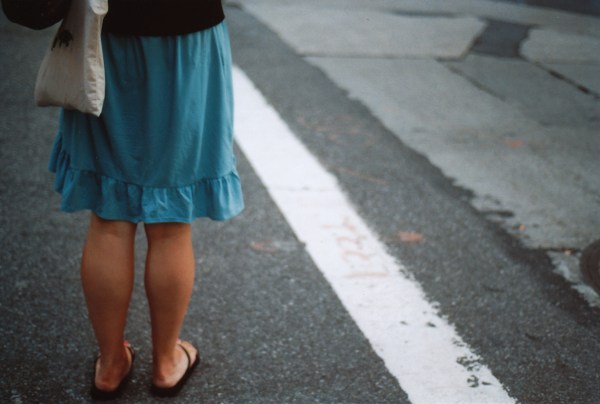
Back in the summer of 2008, when I started to shoot film again, I embarked on a mini-project that involved, simply, following people for about the length of a short city block, and deciding whether or not to take a photograph of them from behind. The criteria was more functional than anything: there couldn’t be a lot of people on said block (otherwise I’d probably run into them with my camera pressed up against my face and me not paying attention to anything other than the subject at hand), and the subject matter couldn’t be walking at such a fast clip that I wouldn’t be able to follow and use my manual focus (walking and manually focusing simultaneously is not easy, people). I sort of gave up on trying to be inconspicuous.
So midtown (slow tourists) and the less-crowded parts of Chinatown (slower, older shufflers) proved to be the most ideal locales, with an occasional shot or two in Brooklyn (moseying dog walkers). You start noticing all these little differences between people: the length of their stride; how some folks are also gazers, looking at everything around them, while others are purposeful, sidewalk-focused walkers; how they carry their shopping bags; and so on. In such a pedestrian-centric town, it was sort of nice to take note of the actual pedestrian-ing.
many moons ago (2).
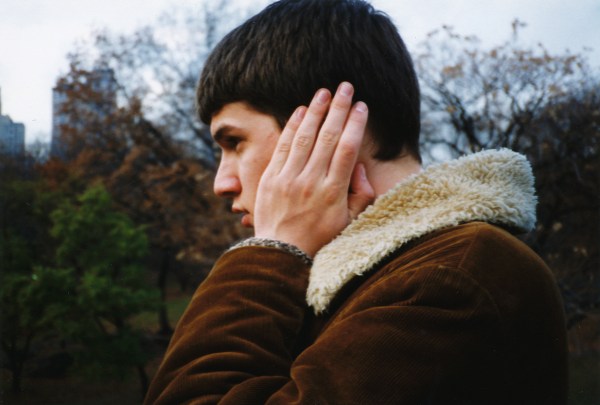
Theron, Central Park, December 1997. Either his ears are cold, or I probably gave some directive like, “Just do something with your hands.” I don’t think either of us planned to re-enact some scene out of a Harmony Korine film.
late afternoon, Q train.

I can’t remember what I was doing on the Q train back in August 2008, or at least in the part of the journey where the train goes above ground (once it hits the top of Prospect Park and goes down the eastern edge of the park). I think maybe Andrew and I were headed to DiFara’s Pizzeria that afternoon. But I do love it when the trains hit natural light — I get that on my commute every morning, when the N and D trains make their way over the Manhattan Bridge — and everyone looks like normal people once again, the ugly subway lights no match for the sunlight streaming in. It’s also why I prefer lamps to overhead lights: the latter obliterates shadows and details, makes everyone (and everything) appear slightly consumptive. There’s just so much more possibility with shadows: depths and nuances otherwise unseen.
day into night.
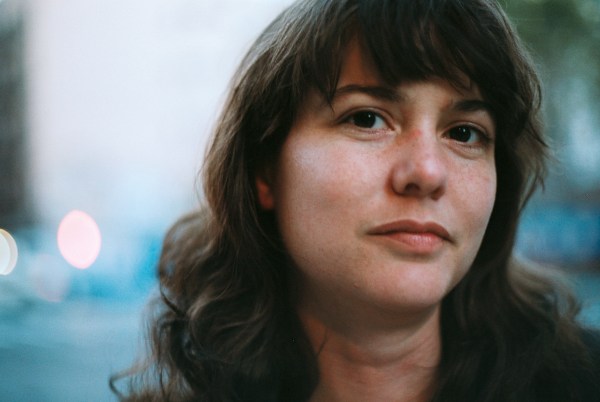
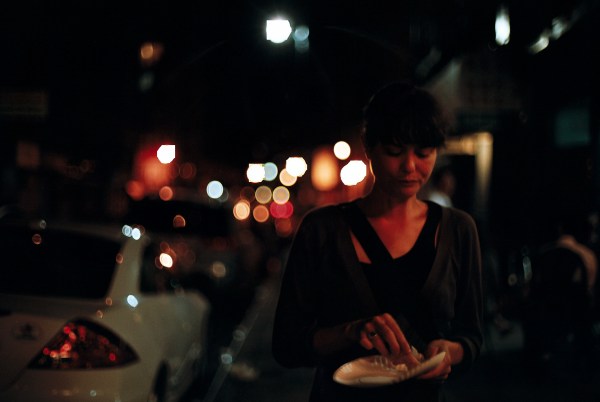
Kathryn and I have a pretty standard weekly ritual, which involves white wine during happy hour at the Marshall Stack, then a couple of slices from Rocket Joe’s Pizza, and then down to the local as the sun starts to hide away. This is one of the few times I’ve actually had a camera around to document it.
Isn’t our dear K lovely?
london 2006.
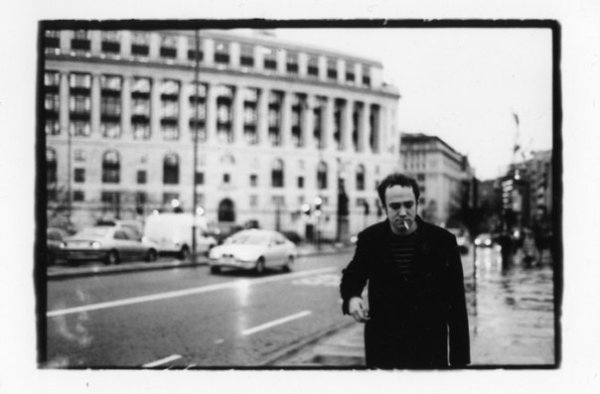
I often wonder if (or worry that) I look like an idiot, running ahead of my walking companion in order to take a photo of them moving towards the camera. The trick is to get far enough ahead so the companion in question has stopped shaking his/her head at your silliness, that they’ve settled back into whatever they were doing and stopped noticing that you and the camera have positioned yourself about 20-30 feet ahead.
This was just a day or two before New Years Day 2007, and the chill permeating through London that winter was impossible to navigate with a camera and bare hands. Andy and I were on our way to the Tate Modern that day, opting to walk so as to get as much of London in as possible I was pretty pleased with how this turned out, even if (or especially because) my hands turned a ghastly shade of violet-blue just before we got inside the museum.
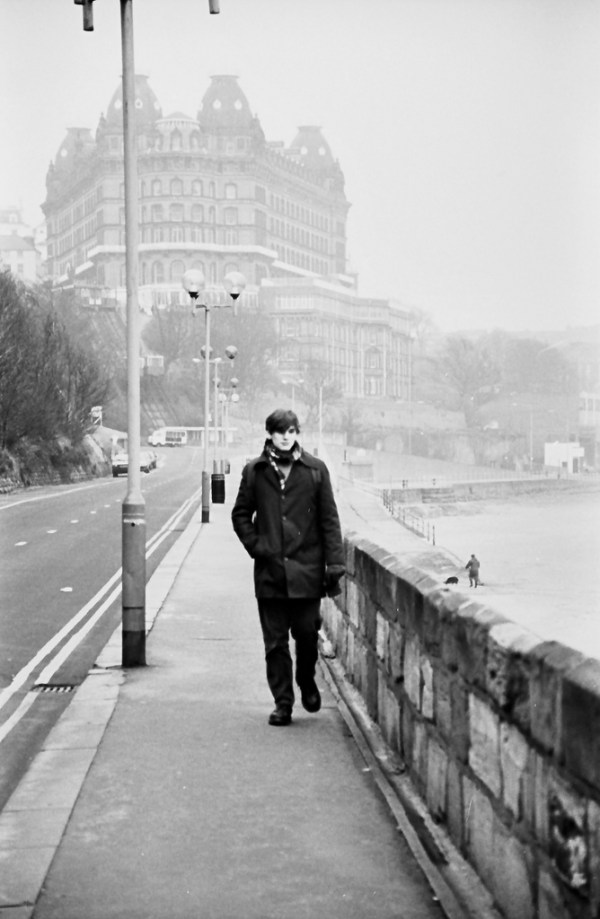
Here’s another one, taken of TS, almost exactly a decade earlier, still in the UK but up north in Scarborough.
my finest moment as a j.crew photographer.
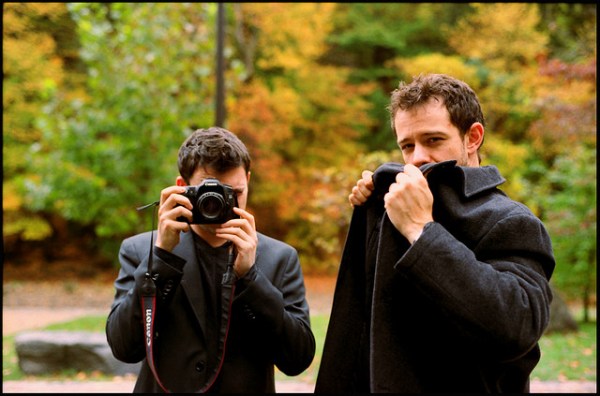
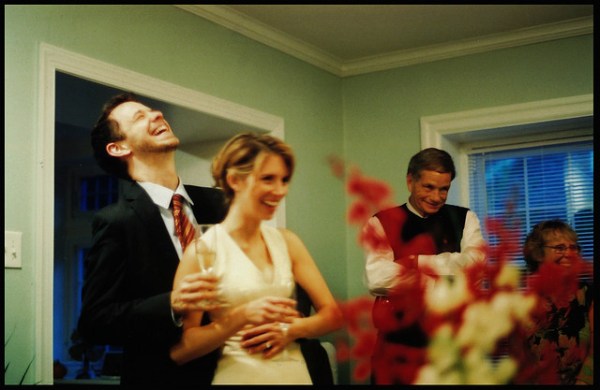
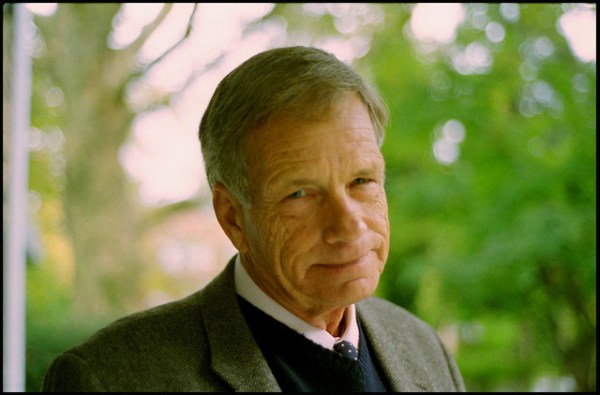
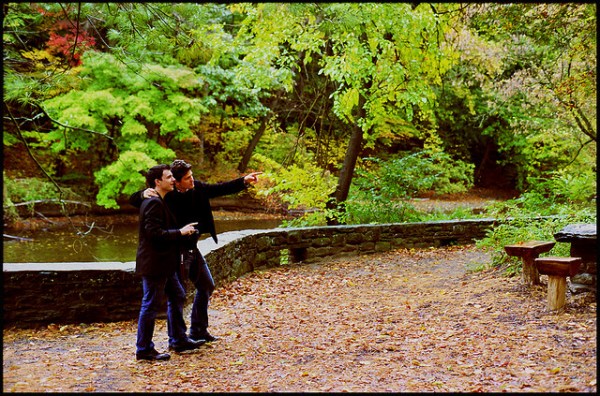
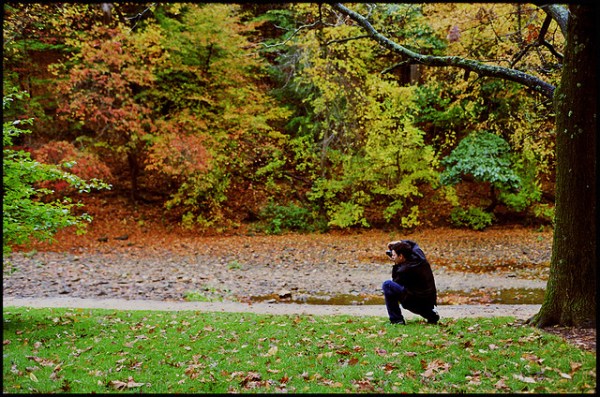
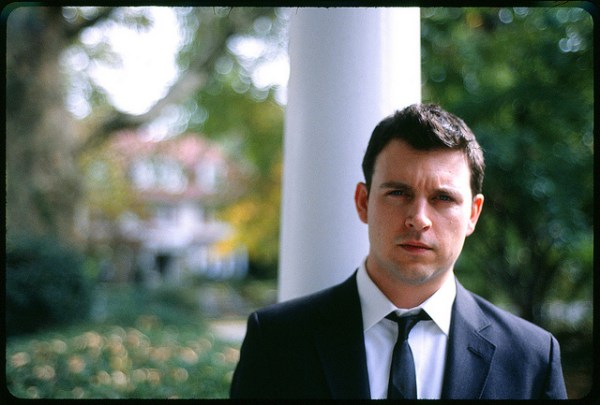
Ok, not really. But a couple of years ago, my friends Matt and Irene got married in their lovely, newly-purchased home in Philadelphia. And in the 24-hour span of the wedding and brunch the following morning at the Valley Green Inn in Fairmount Park, the fall foliage and dark suits conspired to make every photograph feel like a page out of a J.Crew catalogue. After a while, everyone decided just to embrace the cliche, and started to ham it up for the camera.
1997.
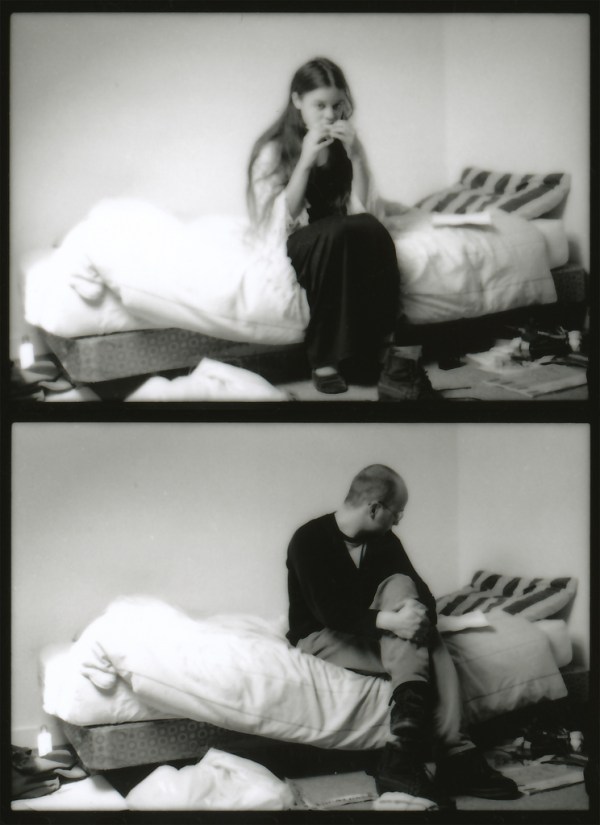
In August 1997, I visited Edinburgh, where Theron was staying for the month while putting on a show with his Cambridge University theatre group for the Fringe Festival. The group had rented a flat near the city centre, a three bedroom, one bath affair for twelve people (and me). Very cozy, to say the least. I’m not sure how they decided who would get the beds and who ended up on the floor, but in the daytime, the beds doubled as couches, since between all of the clothes, sleeping bags, and suitcases strewn about, there wasn’t really anywhere to sit on the floor.
This is Gemma and Gavin, taken about ten minutes apart.
pinhole.
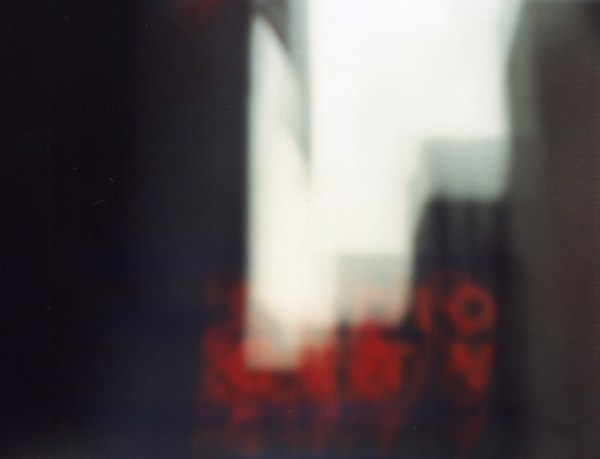
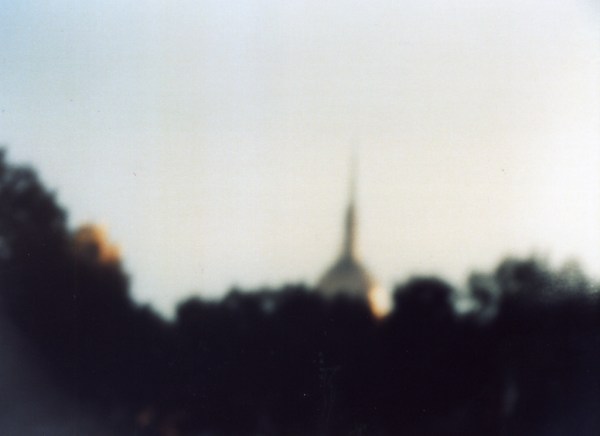
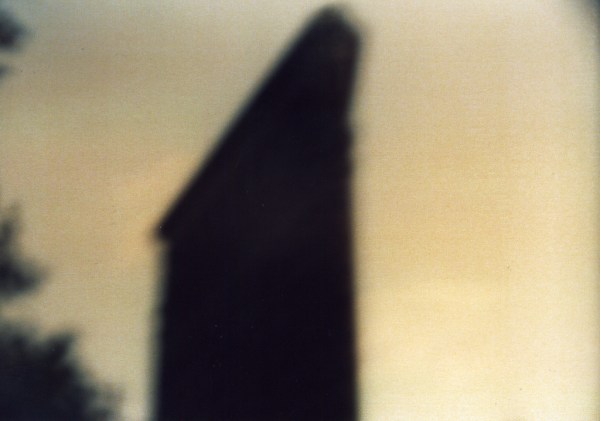
I work in the heart of midtown Manhattan, just north of Rockefeller Center. No matter what time of year, the streets are always filled with camera-toting tourists, craning their necks to gawk at the skyscrapers and stopping, mid-stride, to oooh and aaaah at the Radio City Music Hall signage. I try not to begrudge their obsession with photographing everything in sight — I mean, I’m probably just as bad whenever I’m vacationing in another city. But in the end, I just find myself sighing a lot at how conventional and alike the photographs tend to be, how the need to capture New York in a postcard-perfect way seems to flatten the city.
I don’t begrudge the tourists (though it would help if you didn’t walk down the street, four abreast). But I do begrudge boring cityscape photography. It’s not the tourists’ fault — it’s hard not to take a completely generic photograph of, say, the Brooklyn Bridge with a standard digital (or film) camera. So I try, as much as I can, to avoid taking those sorts of photographs. One thing that helps is walking around with a camera that produces less predictable results, like a Holga or a Lomo; the blurriness and vignetting produced with those cameras tends to give photos — and the city itself — a certain textural quality. Or perhaps invest in a cheapie pinhole camera — I got this one a few years back as a gift, and made my tiny pinprick light opening a bit larger than suggested, to produce an even blurrier effect. I love that I’m not even sure where some of these photos were taken — it’s like getting lost, via my photographs, in my own city.
 hong-an tran